The analyst team closely tracks emerging patterns within the retail brokerage space. During the Reddit-driven GameStop surge, the reliability of brokerage platforms—specifically their uptime and outages—became a major point of attention.
To better understand what caused the wave of outages in the first quarter of 2021, we analyzed publicly available brokerage data. We also reviewed historical figures to provide additional context and identify broader patterns. Here are the key insights.
Extreme GME Volatility Triggered Platform Failures
Periods of intense market volatility in both 2020 and January 2021 were accompanied by a sharp increase in brokerage outages. Among 50 monitored brokers, 18 experienced disruptions between January 20 and February 5, according to uptime tracking data. When GameStop’s (GME) true range volatility indicator surged past 100 on January 27, many platforms began to fail. As a result, reported outages across broker systems spiked dramatically, reaching tens of thousands of incidents.
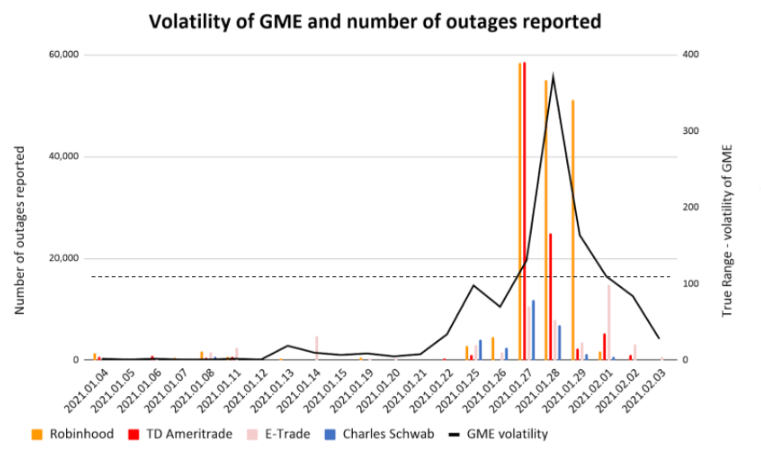
Note to the chart: True range is calculated as the largest of the following:
- Current day’s high minus the Current day’s low
- Current day’s high minus the Last day’s close
- Last day’s close minus the Current day’s low
Market volatility affects broker outages
Volatility increased significantly in 2020 as well due to the COVID-19 market crash. As a result, the number of outages reported grew sharply.
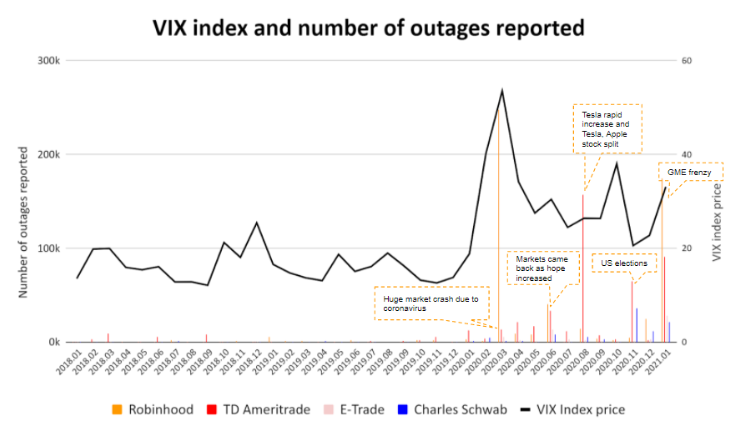
Note to the chart: the VIX (or Volatility Index) is used to measure stock markets’ volatility
Robinhood and TD had the most outages
Among US brokers, Robinhood and TD Ameritrade recorded the most outages over the past three years, with a total of 560,000 and 490,000 reported events, respectively. Many of Robinhood’s major outages were related to its roll-out of new services, such as multileg options and crypto trading. You can see in the chart below the outages for 2018 and 2019.
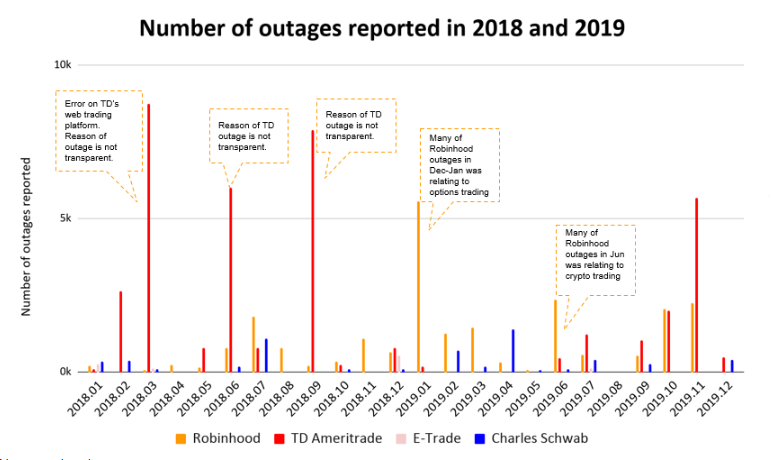
Notes for the chart:
-
Periods were highlighted when a broker recorded more than 2,000 reported outages in a single month, while other brokers remained below that threshold during the same timeframe
-
Robinhood expanded into crypto and options trading in 2018, and the most significant outages identified were linked to these services
-
TD Ameritrade did not publicly disclose the causes of its outages, neither through media channels nor on social platforms
Outages are most likely to happen after market opens
The percentages in the chart below indicate the aggregate number of outages reported between January 2018 and January 2021 in the various time periods at Robinhood, TD Ameritrade, Charles Schwab, E*TRADE, Interactive Brokers, Fidelity, Vanguard and Webull.
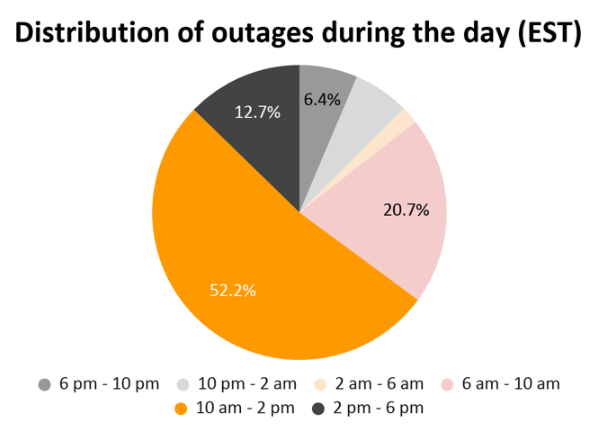
Notes to the chart:
- The percentages are the aggregate number of outages reported between Jan 2018 and Jan 2021 at Robinhood, TD Ameritrade, Charles Schwab, E*TRADE, Interactive Brokers, Fidelity, Vanguard, and Webull.
You can download a copy of our report here.