CFD trading tips – Bottom line
[site-breadcrumb]

CFDs can be useful financial instruments to help you achieve your trading objectives in a user-friendly way. However, CFDs don’t come without risks, so we only recommend CFD trading for experienced traders. If you’re a beginner, it’s probably better to stay away. Wherever you are on that scale, we have collected 12 CFD trading tips for you that will help you survive on the market.
CFD trading, in a nutshell, is making a bet whether a particular financial asset, like a stock index, commodity or a currency pair, will increase or decrease in value.
When you trade CFDs, you do not actually own the real underlying financial assets.
For example, if you want to bet on the euro strengthening against the pound, you can go long on the EUR/GBP CFD. If the euro is up 1% against the pound, the price of the CFD will also increase by 1%. Hence the name: Contract for Difference.
If you are new to CFD trading, it’s a good idea to read this chapter first to understand what CFD trading is.
12 CFD trading tips to help you survive on the market
12 CFD trading tips
We do not possess a secret formula to successful trading, so you shouldn’t expect our CFD trading tips to make you a millionaire overnight. But we do believe that the following points are worth keeping in mind if you want to avoid some of the common pitfalls of CFD trading and make the most out of the experience.
1. Use stop-loss orders
Rule #1: use stop-loss orders. Rule #2: use stop-loss orders. Rule #3: use stop-loss orders. If you want to hear our single most useful CFD trading tip, it’s this: make sure you limit your downside by using stop-loss orders, or even guaranteed stop-loss orders. Don’t know what a stop-loss order is? You can learn about stop-loss and other common order types here.
2. Use a demo account first
Before you jump straight into it, we suggest that you begin your CFD trading career with a demo account, offered by many online brokers. If you want to test our CFD trading tips free of charge before risking actual money, a demo account is a good place to start. If you open a demo account, it’s a good idea to test it with an amount that you’d be actually willing to trade with in real life. In this way, you’ll see more realistic returns and performance. Do you have, let’s say, $1,000 set aside for CFD trading? Enter this as a virtual amount in your demo account, start “trading” and see if you like the outcome.
3. Do your homework
Make sure you understand what you’re doing, both in terms of CFD trading basics and your specific trading portfolio. So don’t start trading before you know what a limit order or a market order is; again, you can find more info about these order types in this article. Don’t try to trade forex CFDs before you understand the difference between a USD/GBP and a GBP/USD quote. And don’t expect to become a specialist in all asset classes or all markets. It’s better to pick a niche (or two) and stick with it.
4. Limit leverage
You can use leverage, but consider this: in most cases, it is unrealistic to think that the price will always instantly move in the desired direction after you opened a position. If leverage is very high, a small move (say 0.1%) in the wrong direction might force you to close out the position and you won’t be able to profit if the price bounces back and starts moving in the “right” direction. Leverage levels of as much as 400:1 are not unheard of; however, at least in the EU, regulators have imposed a 30:1 maximum limit on leverage for major currency pairs. Which brings us to the next point…
5. Use the right trade position
Some brokers do not allow you to lower the leverage manually. In these cases, you might want to consider lowering your trade position. Whatever the case, always make sure you’re aware of your outstanding risk exposure.
6. Do your own homework
Your neighbor, Wilma, is bragging about how much she made on Bitcoin trading. That doesn’t mean she can repeat her performance; and it certainly doesn’t mean that you should jump right in and start trading Bitcoins like your life depended on it. First things first: read research reports, look up articles on the topic, and do your own analysis – fundamental, technical, or both.
7. Devise a trading strategy
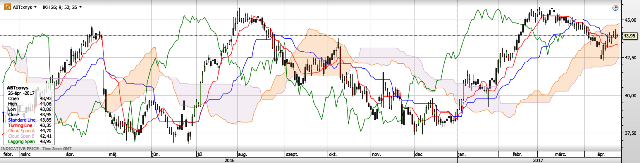
Make sure you set up a strategy for each trade before you open it. For example, you should consider in advance where to close your position, in both best-case and worst-case scenarios. Think about potential scenarios of how your investment may perform. What happens when the underlying price goes up by 5%? What if it falls by 5%? 10%? 50%? You should think through how big a loss you can tolerate, or how big a profit you’d be happy with on that particular position.
8. Consider cutting your losers
Now comes the difficult part. If things go south, make sure that you don’t start chasing your losses and that you remain committed to your initial strategy. You’ll likely make the worst mistakes when you get emotional and want to “win back” what you’ve lost. Don’t do that. Set out your rules and stick to them. For instance, if you decide to set your stop-loss 10% below the purchase price, then don’t deviate from this plan just because you’re a massive fan of that particular stock and you’re convinced that eventually it will do well.
9. Leverage works both ways
Leverage is a double-edged sword – we can’t stress this enough. By using leverage, you can invest more than you actually have. This is a nice feature for sure, but it requires a responsible approach. Leverage doesn’t only amplify your gains; it also amplifies your losses. Are you prepared to lose everything in your account? If not, be careful with the leverage ratio you choose (if you’re allowed to choose at all) and make sure you set the size of your trade position right.
10. Prepare for rainy days
There will always be days when your trading positions go against you, so always keep enough equity/cash in your account, in case you need to put up additional margin. Some brokers don’t issue margin calls at all; they will simply liquidate some of your positions if you fall below margin requirements. This can happen precisely at the worst moments – so do your best to prevent it.
11. Don’t put all of your eggs in one basket
CFD trading can give you access to a wide variety of markets and assets, so there’s ample opportunity to diversify. And you totally should. So just because you think oil stocks are the next big thing, don’t go long in Exxon, Shell and BP plus crude oil at the same time. If you are proven wrong, you’ll be wrong big time, because these assets are all correlated and are likely to move in the same direction. And in a wider context: it’s probably not wise to rely on CFD trading alone for a living. CFD trading can result in really volatile returns (or even big losses), so make sure this is not your only source of income.
12. Choose a reliable CFD broker
Having a good CFD broker can really make a difference in your trading results. For one thing, fees are very important. When you trade frequently, trading fees can carve out a big chunk of your profits. When trading CFDs, the most important cost is the spread cost: the difference between the bid price and the ask price. Make sure you find a broker that determines spreads in a way that doesn’t eat up all of your trading results. And then there is safety. You should do your best to avoid scams. To help you with that, we have compiled a list of the top five CFD brokers; you can rest assured that all are considered a safe choice. Below is a brief description of each, but if you want to find out more (including our methodology for selecting these top brokers), head over to our best CFD brokers article.
12 CFD trading tips to help you survive on the market
Best CFD brokers
We have prepared a list of the top 5 online brokers that provide CFD trading.
| Saxo Bank | Fusion Markets | CMC Markets | Interactive Brokers | Capital.com | |
|---|---|---|---|---|---|
| EURUSD spread | 0.8 | 0.0 | 0.7 | 0.1 | 0.6 |
| GBPUSD spread | 1.3 | 0.2 | 0.9 | 0.3 | 1.3 |
| AUDUSD spread | 0.8 | 0.0 | 0.7 | 0.1 | 0.6 |
| EURCHF spread | 1.4 | 0.6 | 2.5 | 0.4 | 2.2 |
| EURGBP spread | 1.4 | 0.3 | 1.1 | 0.2 | 1.5 |
Want to dig a bit deeper to find the best CFD provider for your needs? Size up brokers side-by-side with the help of our broker comparison table. Alternatively, head to our country selector to find out which broker is available in your country.
Now that we’ve shown you the list of the best CFD brokers, let’s take a closer look at each one.
12 CFD trading tips to help you survive on the market
Top CFD brokers fees
Best broker fees compared
| Saxo Bank | Fusion Markets | CMC Markets | Interactive Brokers | Capital.com | |
|---|---|---|---|---|---|
| EURUSD spread | 0.8 | 0.0 | 0.7 | 0.1 | 0.6 |
| GBPUSD spread | 1.3 | 0.2 | 0.9 | 0.3 | 1.3 |
| AUDUSD spread | 0.8 | 0.0 | 0.7 | 0.1 | 0.6 |
| EURCHF spread | 1.4 | 0.6 | 2.5 | 0.4 | 2.2 |
| EURGBP spread | 1.4 | 0.3 | 1.1 | 0.2 | 1.5 |
12 CFD trading tips to help you survive on the market
What is CFD trading?
As we guide you through CFD trading, it’s important to start with the basics.
What are CFDs? CFDs are derivative products, which means that their value is derived from the value of another asset or security. To be more precise, the price of the CFD will follow the price movements of the underlying security. For example, if you buy an Apple share CFD, then if Apple’s share price goes up, so will the value of your CFD.
CFDs started out as a type of leveraged equity swap in London in the 1990s, primarily used by hedge funds. By the late 1990s, CFDs found their way to the retail market as well, while the 2000s and 2010s saw the first exchange-traded and centrally-cleared CFDs, laying the foundations of dynamic growth. The UK’s Financial Conduct Authority (FCA) estimated that the number of UK CFD brokers doubled between 2010 and 2016, and that UK clients held a total £3.5bn in their accounts. But that growth tells us only one side of the story. Because of the risks inherent in trading CFD contracts, regulators are becoming increasingly strict with CFD brokers. The Australian Securities Exchange closed its CFD exchange in 2014, while in some countries, such as the US or Belgium, CFD trading is banned outright. The European financial regulator, ESMA also introduced more stringent rules in 2018.
In the example below, you can compare the profit/loss effects of a no-leverage equity position and a 10:1 leveraged CFD position. You buy both the equity and the CFD when the underlying price (e.g. Apple share price) is $100.

The advantages of CFD trading
There are four key differences between investing in securities directly and purchasing a CFD.
- Lower trading fees. Trading fees can be lower in certain countries. For example, if you’re a UK trader, you don’t have to pay stamp duty like you would in case of stock trading. For a detailed rundown of fees, visit our fee comparison page.
- You can short. It is a lot easier to “go short” using CFD trading – allowing you to bet that the price of a particular security will go down, which otherwise may be tricky or impossible for retail investors in most asset classes.
- Wider market and product coverage. Because of the derivative nature of CFDs, issuers can offer more diverse products, from single stocks to more exotic products like cryptos.
- Smaller trades. You can usually choose the trade size of a CFD, which can be as low as a couple of dollars. This might not be possible with the real underlying product, where minimum trade sizes can reach thousands of dollars. A good example of this is oil, where the size of a standard futures contract is 1,000 barrels, worth tens of thousands of dollars.
- Use of leverage. Even a small investment can earn you nice and fat returns if you use leverage smartly. Let’s say you bought that Apple CFD for $100 on a 10% margin or 10x leverage (i.e. you only paid $10, the rest of the $100 price is the leverage). If the price goes up to $109, your gain will be $9, translating to a whopping return of $9 / $10 = 90% on your initial $10 investment; whereas if you invested $100 in the actual shares, your $9 return would have only translated to $9 / $100 = 9%.
Sounds too good to be true? Well, it is true, but there is a catch.
Leverage is a delicate thing, and it amplifies your gains as well as your losses; therefore traders should be extra cautious.
-
If, instead of going up, the Apple CFD price fell from $100 to $90, your initial investment of $10 would have been completely wiped out, and your loss would have been 100%, not 10%.
A step-by-step guide to CFD trading
1. Practice with a demo account
Before getting into CFD trading, try a demo account. See if you can do well in a safe environment, and don’t assume your performance will be any better when you start risking real money.
2. Open your real account
This is nowadays quite easy and fast with any CFD broker.
3. Fund your account
Don’t put your life savings in it. Start small – and we really mean small! – and keep in mind that you are using leverage, so you don’t necessarily need that much money anyway. You can usually fund your account via a credit/debit card, bank transfer, or even electronic wallets such as PayPal.
4. Choose your asset and set the leverage
Let’s revisit one of our best and most important CFD trading tips: you don’t have to max out on leverage. And when choosing an asset, make sure you do your research and that you are not placing an order simply because your mate Jimmy swore it was the deal of the century. At some CFD brokers, you can set the leverage manually, while at other brokers this is not possible and you have to go with the default pre-set leverage.
5. Start trading by placing orders
Place your order by choosing your order type and term. Do not forget to set up stop-loss orders if necessary.
6. Monitor your trades
Once your order is executed, don’t forget to review and monitor your trade positions regularly.
Available markets and asset types
A good thing about CFDs is that they give you a wide range of trading opportunities. Whatever markets or asset classes you have in mind, chances are that you will find CFD trading opportunities for each. Just to name a few:
- Single stocks
- Forex
- Stock indexes
- Commodities (metals, energy, etc)
- Bonds
- Options
- Cryptos

-
Likewise, available markets are also quite varied. For instance, a European trader can easily find CFDs with underlying assets from all over the world, from Canadian stocks to Asian indexes.
COMPARE CFD PRODUCT PORTFOLIO
12 CFD trading tips to help you survive on the market
Risks of CFD trading
CFD trading is risky business. And we don’t mean the sort of business Tom Cruise ran in this classic 1983 movie. In 2016, the FCA estimated that ca. 80% of CFD traders lost money. Yes, that’s right: less than 1 in 5 persons made a profit on these instruments. You may be that one lucky guy or gal, but we suggest you stay realistic. You are a lot more likely to make losses than to make gains. Besides relying on our CFD trading tips, you should also be aware of the following pitfalls

- Leverage. We already discussed this.
- Counterparty risk. When you trade over-the-counter, you make a contract with another
person / institution (your counterpart) about a future transaction. When you enter into a contract like this, there’s always a risk that your counterparty won’t honor the agreement and fails to pay you out.
-
Common Trading Pitfalls: Scams, Hidden Costs, Margin Calls and Slippage
Fraud and Scams
One of the biggest dangers in online trading is falling victim to fraudulent schemes. You have probably seen flashy advertisements promising financial freedom, luxury lifestyles, and effortless profits with just a few hours of trading per week. These promotions are almost always run by scammers — and in many cases, the entities behind them are not legitimate brokers at all. With so many deceptive operations out there, it’s essential to verify that you’re dealing with a properly regulated and trustworthy brokerage before opening an account. Independent broker reviews and thorough research can help you avoid costly mistakes.Lack of Transparency in Spread Pricing
The spread refers to the gap between the bid price (what you can sell for) and the ask price (what you can buy for). For many traders, especially when dealing with CFDs, pricing structures can feel confusing and unclear. In reality, spread calculations are often presented in a way that makes it difficult to fully understand the true cost of a trade. Unfortunately, not all brokers provide the level of transparency traders would expect, which makes comparing fees and overall costs more challenging than it should be.Margin Calls
A margin call is something every leveraged trader hopes to avoid. It occurs when the value of your open position drops so significantly that your account balance can no longer cover the required margin. When this happens, you must deposit additional funds to maintain the position. For example, imagine you open a CFD position on a stock at $100 using $10 of margin. If negative market news causes the price to fall to $80, your $20 loss exceeds the initial margin. Your account would effectively show a negative balance of $10, and you would need to add funds to cover the shortfall.Slippage
Trade execution is never completely instantaneous. Even a slight delay between placing an order and its execution can result in a different price than the one you initially saw. This phenomenon is known as slippage. Suppose you have $100 in your account and open four positions at roughly the same time, each requiring $25 in margin. If prices move slightly before execution and the margin requirement on the first trade increases to $26, you may no longer have enough available funds to execute all four trades. Small price movements during execution can therefore impact both costs and order fulfillment.
12 CFD trading tips to help you survive on the market
Keep in mind – Safety
What happens when you trade CFDs issued by your broker and the broker becomes insolvent? Although this is not an issue directly related to CFD trading, it’s important to ask the question: will you be covered by national investor protection schemes such as the UK’s FSCS (Financial Services Compensation Scheme)? The good news is yes, you will be protected.
- Global CFD trading regulation is quite fragmented. In general, CFD trading is allowed in Europe, but the situation in the rest of the world is mixed. For example, CFDs are banned in the US but allowed in Canada.
Broker Safety, Regulation and Investor Protection Explained
We recommend working only with high-quality, well-established brokers, which significantly reduces the risk of falling into fraudulent schemes. The platforms featured on our list are authorized and supervised by leading financial regulators, and some are even publicly traded companies — adding an extra layer of transparency.
That said, even large and reputable financial institutions are not immune to failure. History has shown this clearly with the collapse of Lehman Brothers. Events like this highlight why it’s essential to understand what would happen to your money and investments if a brokerage firm were to become insolvent.
In many jurisdictions, regulatory authorities have introduced investor compensation schemes designed to protect clients in such scenarios. These programs aim to safeguard client assets — though the level of protection varies depending on the country and regulatory framework involved.
It’s also important to note that coverage limits are not uniform. The maximum compensation amount differs from one country to another, and in many cases, cash balances and securities are protected under separate rules. Before opening an account, it’s wise to review the specific investor protection scheme that applies to your chosen broker so you clearly understand what coverage you would be entitled to.
Below, you can find a comparison table outlining the investor protection limits applicable to clients of the top five CFD brokers.
| Saxo Bank | Fusion Markets | CMC Markets | Interactive Brokers | Capital.com | |
|---|---|---|---|---|---|
| EURUSD spread | 0.8 | 0.0 | 0.7 | 0.1 | 0.6 |
| GBPUSD spread | 1.3 | 0.2 | 0.9 | 0.3 | 1.3 |
| AUDUSD spread | 0.8 | 0.0 | 0.7 | 0.1 | 0.6 |
| EURCHF spread | 1.4 | 0.6 | 2.5 | 0.4 | 2.2 |
| EURGBP spread | 1.4 | 0.3 | 1.1 | 0.2 | 1.5 |
FILTER BROKERS BY INVESTOR PROTECTION
12 CFD trading tips to help you survive on the market
CFD trading tips – Bottom line
Our CFD trading tips are a good start, but make sure you always do your homework. Learning by doing is often a good way to approach things, but losing your life savings just to learn how not to trade CFDs is perhaps not the best idea.
A few final words, then: limit your losses, keep your head cool, and don’t go overboard. Trading can be a great experience, and CFDs allow you to access markets that you otherwise couldn’t.
So are you interested in trading CFDs? If you’re still not sure which is the best CFD broker in 2022, this little summary might provide further clarity.
| Saxo Bank | Fusion Markets | CMC Markets | Interactive Brokers | Capital.com | |
|---|---|---|---|---|---|
| EURUSD spread | 0.8 | 0.0 | 0.7 | 0.1 | 0.6 |
| GBPUSD spread | 1.3 | 0.2 | 0.9 | 0.3 | 1.3 |
| AUDUSD spread | 0.8 | 0.0 | 0.7 | 0.1 | 0.6 |
| EURCHF spread | 1.4 | 0.6 | 2.5 | 0.4 | 2.2 |
| EURGBP spread | 1.4 | 0.3 | 1.1 | 0.2 | 1.5 |
FILTER BROKERS BY INVESTOR PROTECTION
Still not sure? Get a personal recommendation. Or feel free to check what CFD brokers are available in your country.